















Dark Energy Camera Captures The Most Detailed Image of the Betta Fish Nebula
Nov 27, 2026
Soumyadeep Mukherjee
Soumyadeep Mukherjee is an award-winning astrophotographer from India. He has a doctorate degree in Linguistics. His work extends to the sub-genres of nightscape, deep sky, solar, lunar and optical phenomenon photography. He is also a photography educator and has conducted numerous workshops. His works have appeared in over 40 books & magazines including Astronomy, BBC Sky at Night, Sky & Telescope among others, and in various websites including National Geographic, NASA, Forbes. He was the first Indian to win “Astronomy Photographer of the Year” award in a major category.
Share:
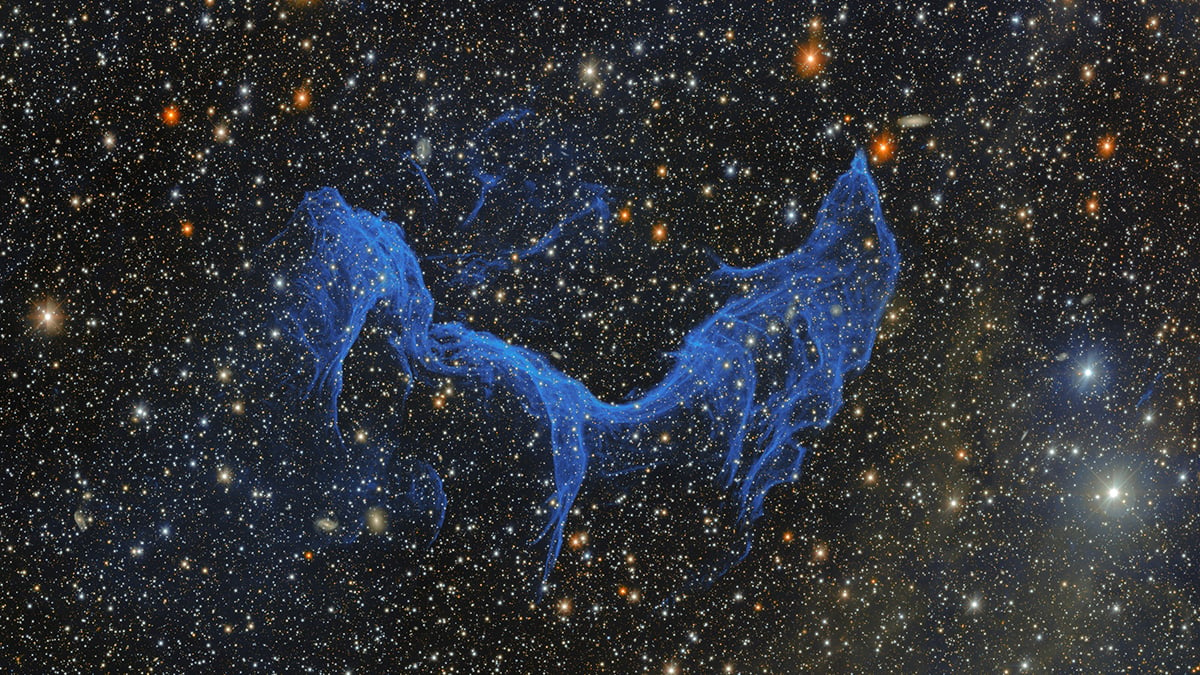
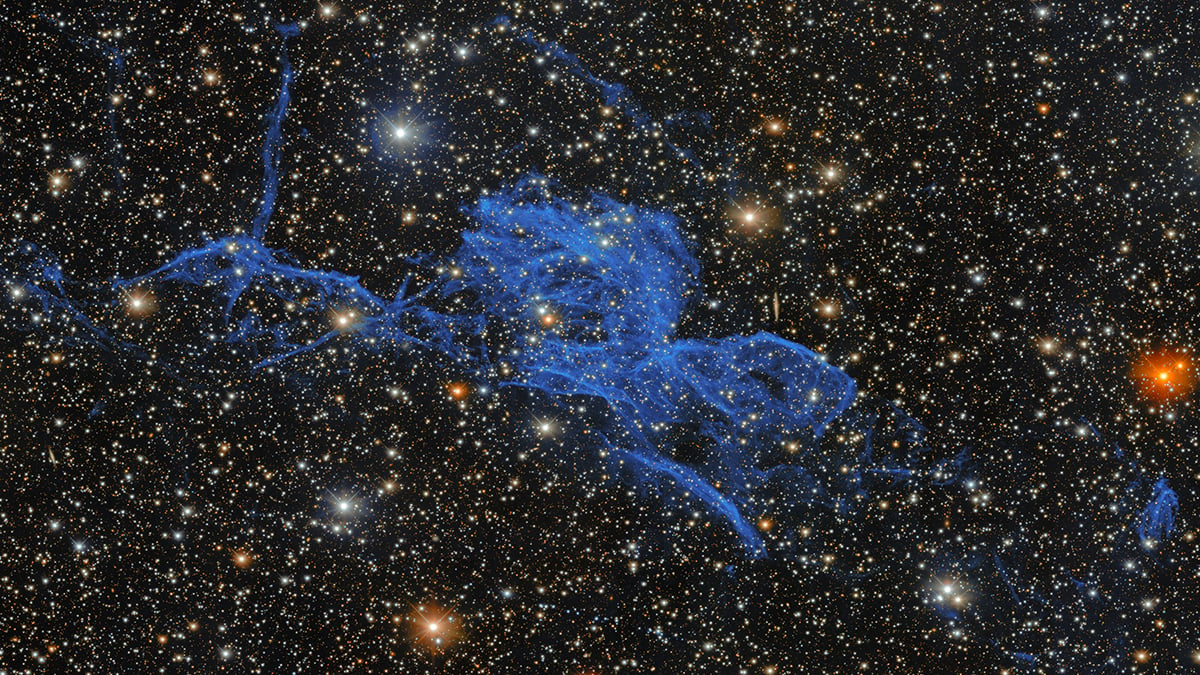
A new photograph from Chile’s Cerro Tololo Inter-American Observatory shows the remains of a star that exploded nearly 6,800 light-years from Earth. Known as the Betta Fish Nebula, this supernova remnant contains long blue filaments that resemble the flowing fins of a betta fish. The image was captured by the 570-megapixel Dark Energy Camera (DECam), mounted on the Víctor M. Blanco 4-meter Telescope.
The object, catalogued as SNR G295.5+09.7, lies in the constellation Centaurus. Its expanding outer layers have interacted with gas in the surrounding interstellar medium, producing the blue structures visible in the photograph. The explosion also left behind a neutron star, which now sits inside the remnant’s outer shell.
The stellar explosion behind the Betta Fish Nebula
The Betta Fish Nebula owes its name to the shape of its blue filaments. In the wider photograph, these structures form an irregular cloud. A closer view reveals several curved ribbons that resemble the fins and tail of a betta fish. The resemblance is strongest in one section of the remnant, where the strands extend outwards from the central region.
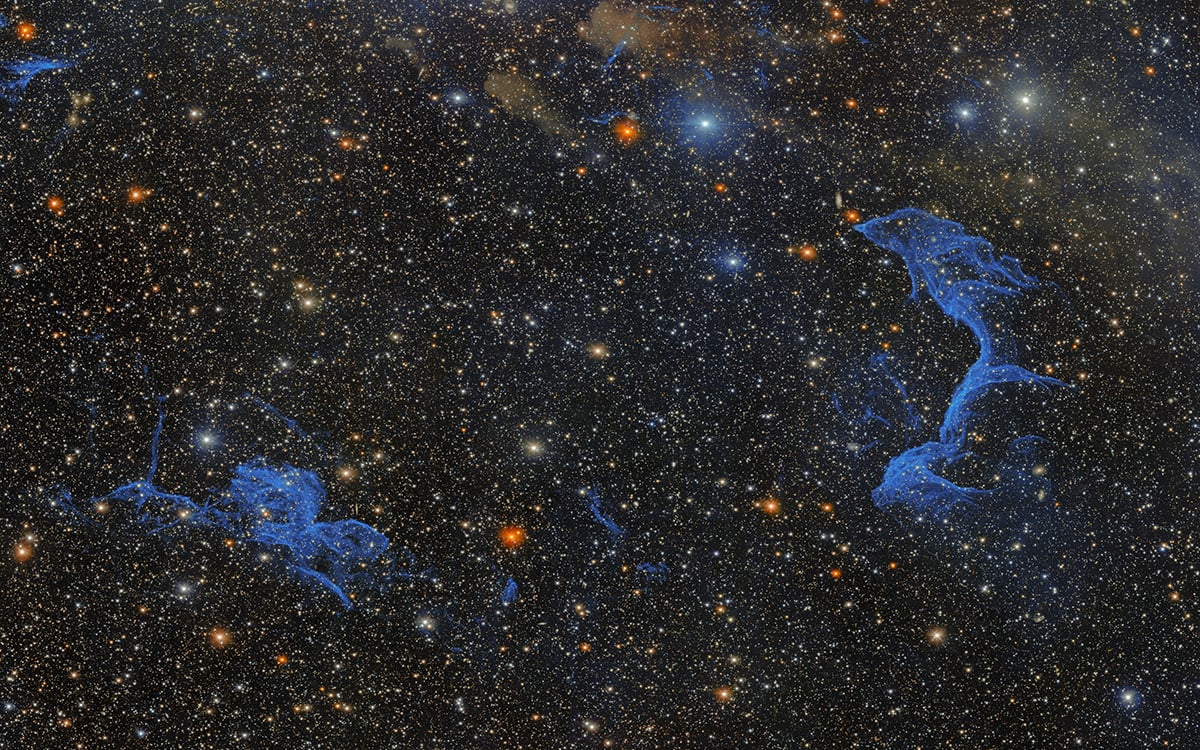
Astronomers classify SNR G295.5+09.7 as a supernova remnant. It was formed when a star many times more massive than the Sun reached the end of its life and exploded. During the event, the star expelled its outer layers at tremendous speeds. That material then expanded into the space between stars, where it encountered surrounding gas.
The collision produced shock waves that heated the interstellar gas and made it glow. The blue ribbons in DECam‘s photograph trace this interaction between the expelled stellar material and its surroundings. Their shapes reflect the complex movement of gas through the region. The remnant continues to expand as the material from the explosion spreads through the Milky Way.
A closer look at the nebula’s galactic neighborhood
The Betta Fish Nebula lies approximately 6,800 light-years away in Centaurus, a constellation visible from the Southern Hemisphere. It belongs to the Carina–Sagittarius arm of the Milky Way. This spiral arm contains vast numbers of stars, along with clouds of gas and dust that occupy the space between them.
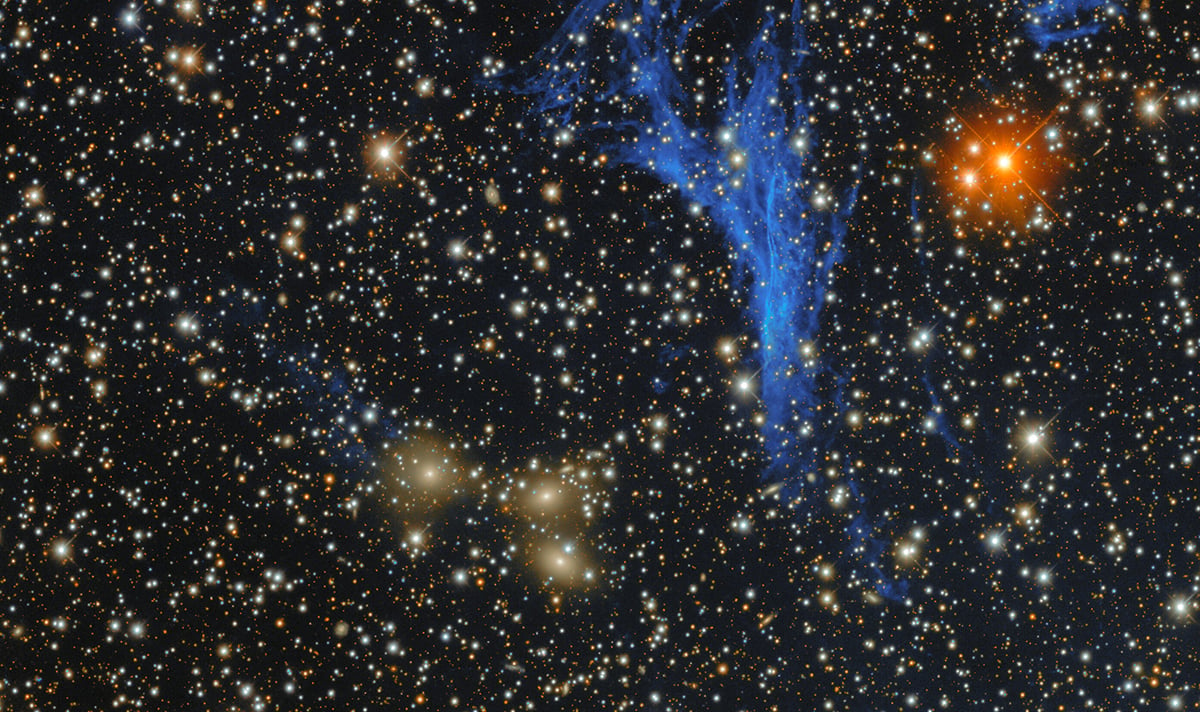
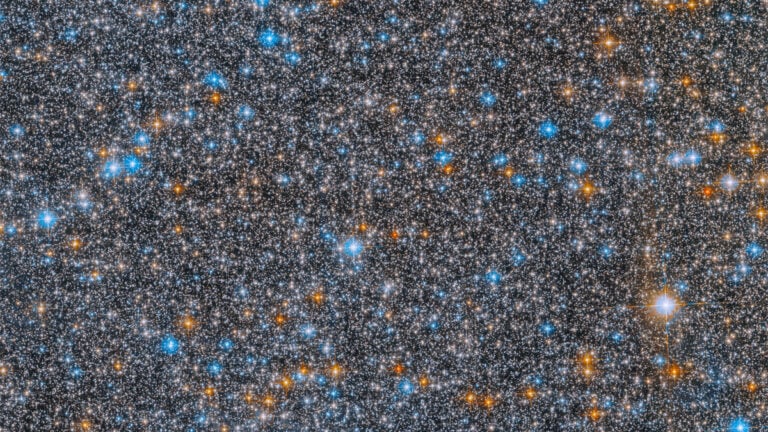
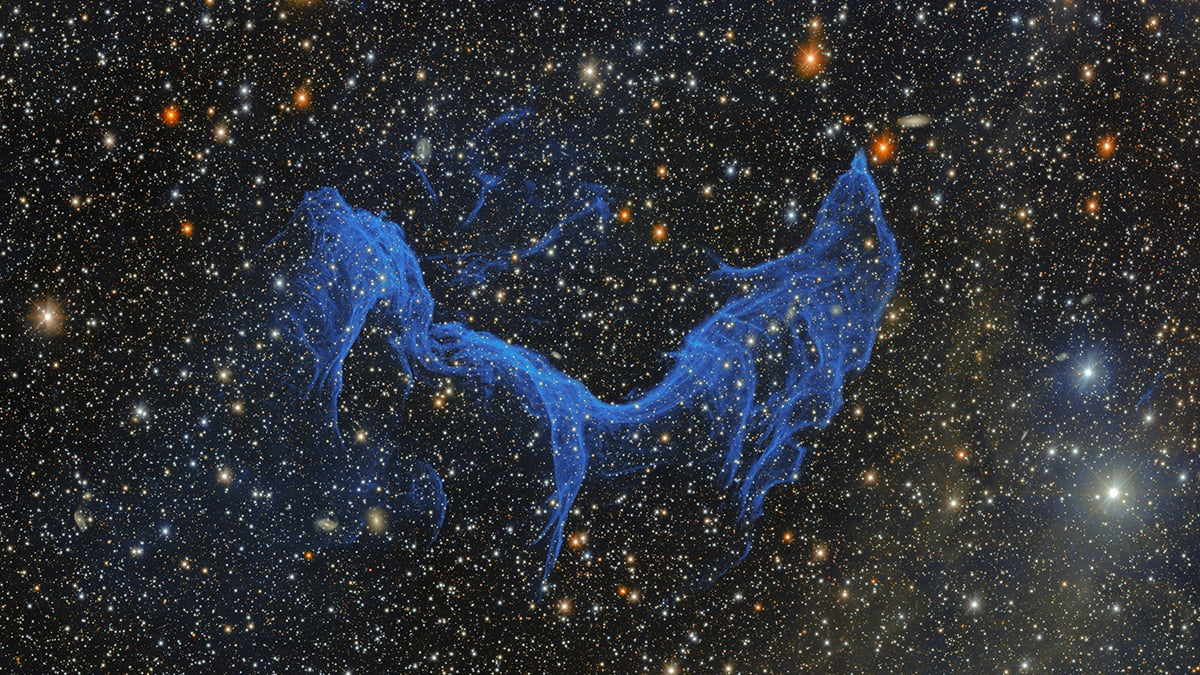
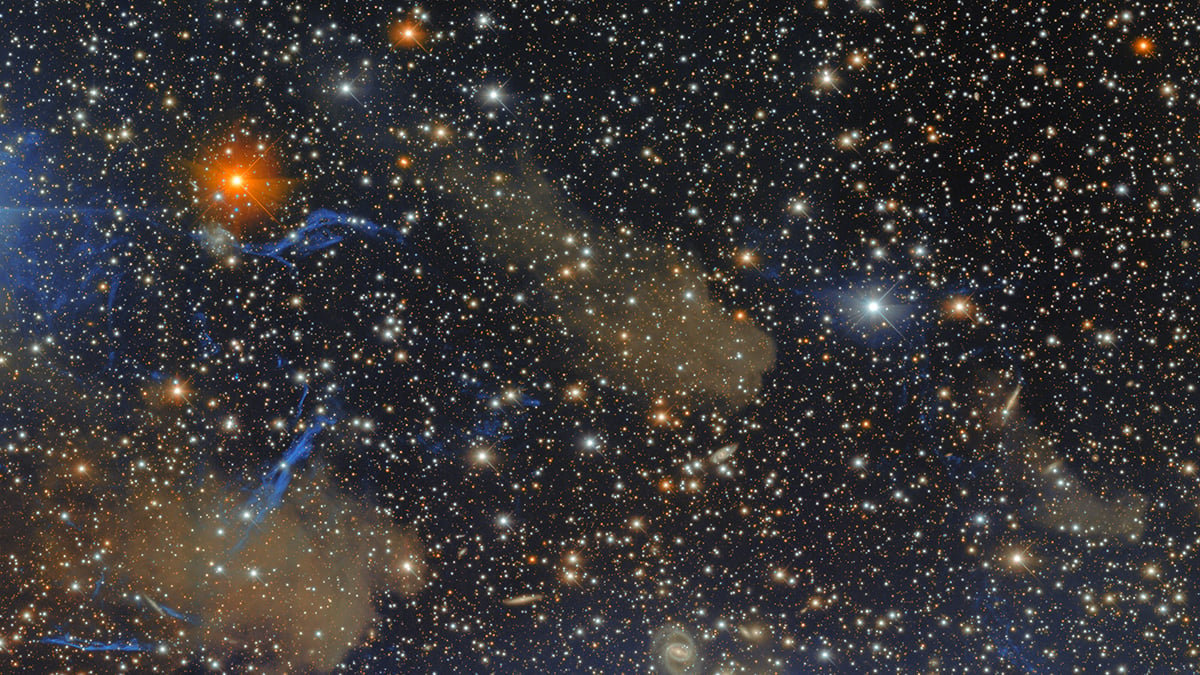
The new DECam image captures the remnant in this busy region. Thousands of stars appear across the frame, surrounding the blue filaments. Some belong to the same galactic arm, while others lie at different distances along our line of sight.
Dark brown patches also run through parts of the background. These are interstellar clouds containing gas and dust. They absorb and scatter light from more distant objects, making some areas appear darker than their surroundings. Unlike the more concentrated structures of many nebulae, these clouds can extend across large regions of space.
Capturing the image
DECam captured the Betta Fish Nebula using its 570-megapixel imaging system. The U.S. Department of Energy developed and fabricated the camera for the Dark Energy Survey. It operates at the prime focus of the Víctor M. Blanco 4-meter Telescope at the Cerro Tololo Inter-American Observatory in Chile.
The camera uses an array of highly sensitive charge-coupled devices, or CCDs, to record incoming light. These detectors convert photons into electrical signals, which computers then process into digital images. Their sensitivity allows astronomers to photograph faint objects that would otherwise remain difficult to detect.
One of DECam‘s main strengths is its wide field of view, which covers approximately three square degrees of sky. For comparison, the full Moon spans about half a degree. This allows the camera to record large celestial structures without requiring astronomers to assemble dozens of separate frames.
Clear skies!
See more from DIYPhotography.net on Google
Add DIYPhotography.net as a trusted source. This makes
our stories more likely to appear in your Google Search results.
 Add as a preferred source on Google

Soumyadeep Mukherjee
Soumyadeep Mukherjee is an award-winning astrophotographer from India. He has a doctorate degree in Linguistics. His work extends to the sub-genres of nightscape, deep sky, solar, lunar and optical phenomenon photography. He is also a photography educator and has conducted numerous workshops. His works have appeared in over 40 books & magazines including Astronomy, BBC Sky at Night, Sky & Telescope among others, and in various websites including National Geographic, NASA, Forbes. He was the first Indian to win “Astronomy Photographer of the Year” award in a major category.
Join the Discussion
DIYP Comment Policy
Be nice, be on-topic, no personal information or flames.