





Studio Lighting – Super Simple Light Tent
Dec 2, 2006
Udi Tirosh
Udi Tirosh is an entrepreneur, photography inventor, journalist, educator, and writer based in Israel. With over 25 years of experience in the photo-video industry, Udi has built and sold several photography-related brands. Udi has a double degree in mass media communications and computer science.
Share:
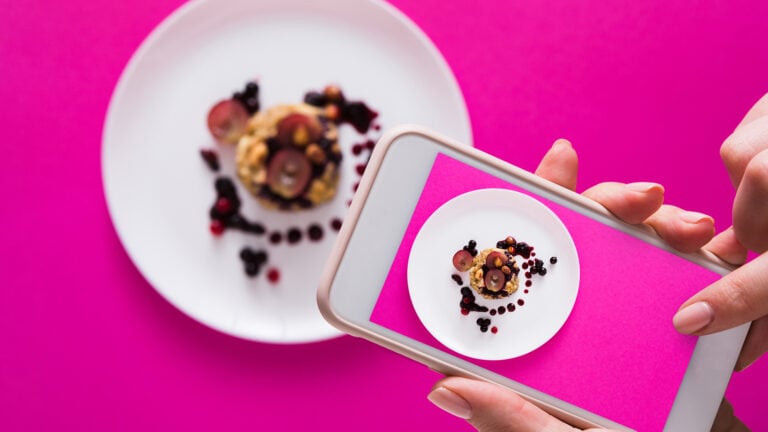
 I was inspired to do this project after seeing the PVC light tent posted on the MAKE blog. This light tent uses a cardboard box and some white material (Tyvek) and allows you to take reasonable photos of products such as bottles, watches, jewelry, small objects, etc. There is lot’s of room for improvement but for the sake of 15 minutes I hope you will agree it’s pretty good :)

Select materials
First thing to do is find your self a usable box. The box I used is a half of a resin plastic shelf. The dimensions are roughly 16″ x 15″ x 15″. This size has handled most things I have put in it, however I think something a little wider would be easier to use.Materials used- Masking tape or other heavy tape (Duct, packing, etc)- X-acto knife- Ruler- Glue Stick- Semi transparent white material (Tyvek, White suiting/Ripstop nylon, bed sheets, etc)

Cut the box
1) Lay the box flat
2) using the ruler add a 1″ to 1-1/2″ border to all sides of the box (top, bottom, left and right) – Essentially you want to cut a hole in all sides of the box.Tip: don’t forget to add a line on either side of the center of the box as it lays flat :)
3) Cut out the four panels of the box using an x-acto knife and cutting on the lines.See the images below if the above is unclear.

Assemble the Skeleton
1) Open up the box and close the bottom of the box
2) Tape down the exterior and interior seam.
3) The Bottom of the box will serve as the platform for placing your objects.

Wrap the box
1) Using the semi-transparent material you have chosen wrap it around the box so that it covers 3 of the four sides
2) I used sign printing grade Tyvek and attached it using a glue stick.

Add continuous background
This is part of the magic of the light tent, creating a continuous background in your images. To do this we add a piece of Bristol board (or polypropylene sheet) cut to fit the box.
1) Use the depth of the box + the height of the box as a rough measurement.
2) cut out a piece of Bristol board that matches the dimensions above.
3) This creates a nice white platform to shoot your images against. Try using other colors, Blue, Black, etc. You can see a similar idea in the cheap studio article.
4) Insert the Bristol board into the box so that the edge of the Bristol board is placed against the front of the box and the card board is allowed to curve like a wave, half-pipe, you get the picture (I hope :) )As usual the pictures will make it all clear. :)

Add light and enjoy
1) Now that you have the box wrapped, and the continuous background in place you are ready to take some photos.
2) I used a desk lamp, and a couple of Ott lights (13watt) for the apple shot in the beginning of this article.
3) For better/different results I am switching to the simple clamp style fixture used in the PVC light tent with 100 watt bulbs.
4) Experiment with light location and diffusing the light that shines through the top of the box with other semi transparent material, nylon, etc.The light entering the box will be diffused and the shadows will soften or disappear…
NOTE: At this stage (or perhaps before) you can and probably cover the inside of the box with white as well, at least the frame. Or you could switch the white material from the outside to the inside. I bring this up because It was pointed out over at DPReview.com that there is a black reflection in the photos produced using this box…. I hope that will fix it :)

End Result
Here are some examples of shots taken with this light box.. I am by no means a photographer but to my untrained eye these shots look pretty good.

If you have used the DIY Light Tent in this article, please post a comment with a link to your structure / photos – show off!
This article was contributed by Bill Wilson from www.steadywinds.com who is not only a potent photographer, but is also great at kite making

Udi Tirosh
Udi Tirosh is an entrepreneur, photography inventor, journalist, educator, and writer based in Israel. With over 25 years of experience in the photo-video industry, Udi has built and sold several photography-related brands. Udi has a double degree in mass media communications and computer science.


Join the Discussion
DIYP Comment Policy
Be nice, be on-topic, no personal information or flames.
2 responses to “Studio Lighting – Super Simple Light Tent”
Hello. I have shooting tent that I bought on eBay and shooting outside in daylight with lowest ISO but it seems the light that I get is not strong enough. Maybe I will need indoor lighting projector because I see that you use desk lamp and I am not sure it will be enough.
I recently built a similar light tent for a last minute product shoot. Worked much better than I expected. Thanks